




Outward Opening Doors – Reversed Nightlatches
Overview
Outward opening doors are becoming increasingly common, and installing a lock that automatically secures the door when closed should not pose any issues. However, this is not typically how a nightlatch lock is installed, often causing confusion, even among experienced carpenters and locksmiths.
This guide aims to help you select and install the correct nightlatch for your door, ensuring proper functionality while maintaining a neat appearance.
Selecting the Type of Nightlatch
Choosing the correct nightlatch is the most critical step in installing an outward-opening door. Ensure that the lock you select is compatible with your door. The Lockshop Warehouse offers a variety of locks suitable for both single and double doors.
Nightlatches come in two sizes: a 40mm backset or a 60mm backset. The backset refers to the distance from the door’s edge to the center of the cylinder hole. If your door contains glass, the 40mm version is advisable to avoid drilling near the glass. For solid wood doors, the 60mm version provides more room for key turning and easier internal lock operation.
Unfortunately, no lock manufacturers have yet created a BS3621 insurance-rated nightlatch for outward-opening doors. Therefore, you have two potential solutions:
Option 1:
Install a standard reversed nightlatch and pair it with a 5-lever mortice deadlock that is BS3621-rated. Mortice deadlocks are suitable for either side of the door and will meet the BS3621 standard for outward-opening doors.
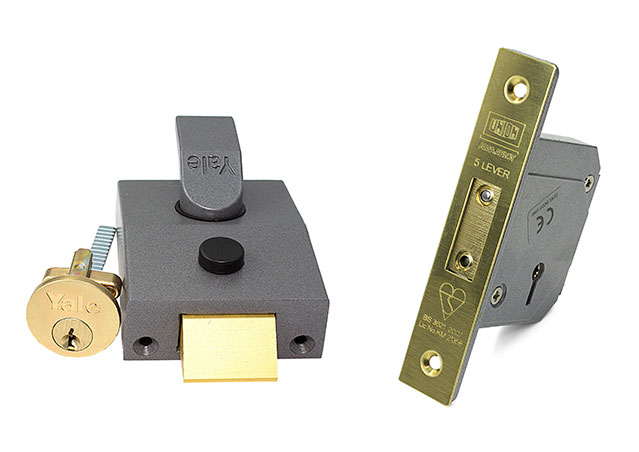
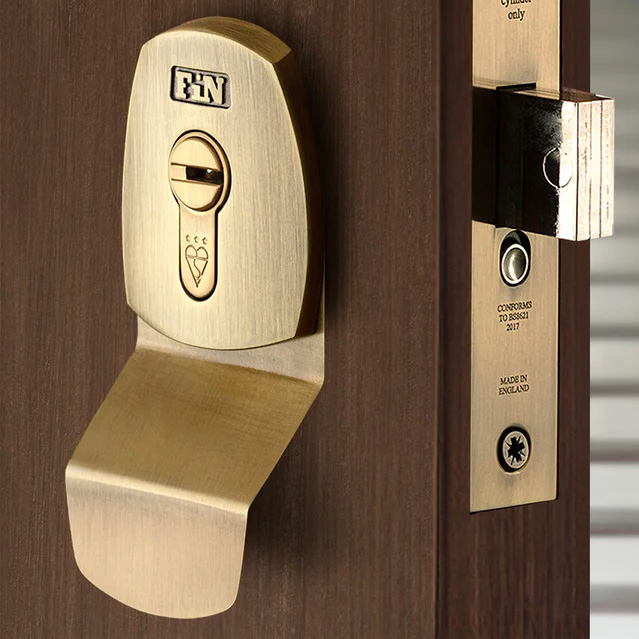
Option 2:
Install a new FinFort auto-locking mortice deadlock, the first of its kind. This lock is BS3621-rated and automatically secures the door upon closing, just like a traditional nightlatch.
Selecting the Type of Strike Plate for the Lock
Locks are typically supplied with strike plates designed for inward-opening doors. Problems arise when these strike plates are used for outward-opening doors, as they are not designed to function properly. Using the wrong strike plate can result in unsightly damage to the door frame. Thus, selecting the correct strike plate is essential.
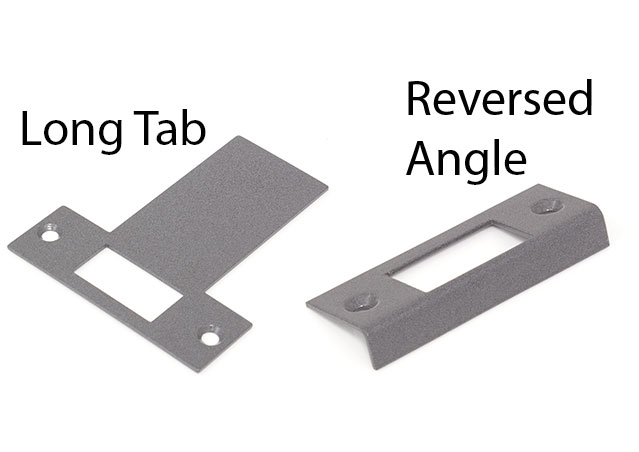
There are two main types: the long tab and reversed angle strike plates, which are available in different finishes. Each type requires a different installation method, as explained below.
Single Doors: Fitting Outward Opening Nightlatches and Strike plates
Most nightlatches available for single doors will require an additional strike plate suited for outward-opening doors. These strike plates are either the long tab or reversed angled versions, each fitting in a unique way.
There are two primary methods for installing outward-opening nightlatches, each requiring a different strike plate:
Installation Method 1 – Long Tab Strike Plate:
This strike plate is fitted into the door frame by chiseling it flush to the wood. The nightlatch itself is mounted on the edge of the door (either 40mm or 60mm backset, as standard). Since the latch will drag along the door frame, the leading edge of the long tab strike plate protects the woodwork when opening and closing the door.
A drawback of this method is that the lock, installed on the inside of the door, will hit the door stop when closed. To resolve this, you must cut away part of the door stop around the lock, leaving a visible gap along the edge of the door (notice the white light leaking through in the image below). This gap can be concealed by attaching an overlapping plate or a piece of wood to the door's exterior.
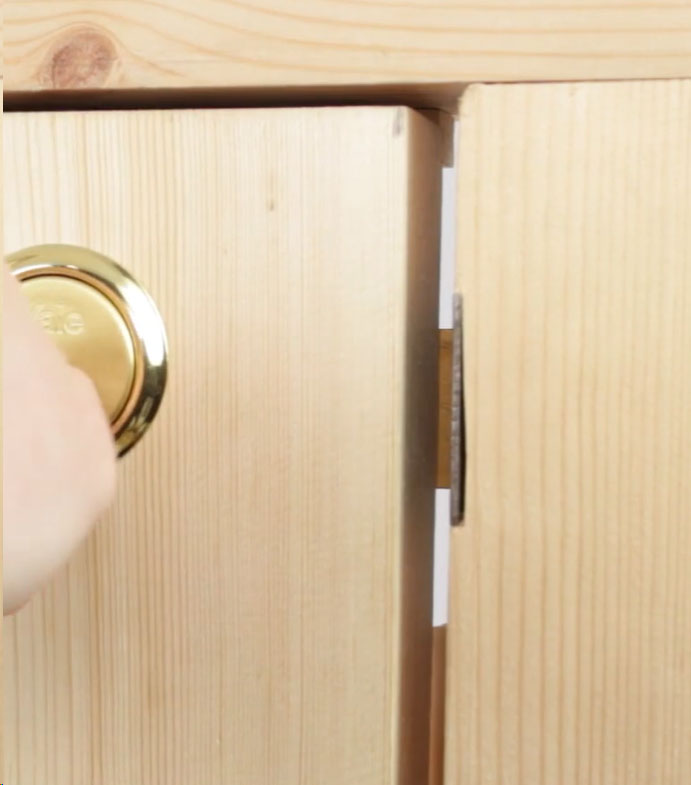
While this method provides superior strength against forced entry, it is not the most visually appealing option.
Installation Method 2 – Reversed Angled Strike Plate:
This method involves setting the lock back the width of the door stop, instead of directly mounting it on the edge of the door. With this approach, the lock avoids contact with the door stop, sitting neatly next to it.
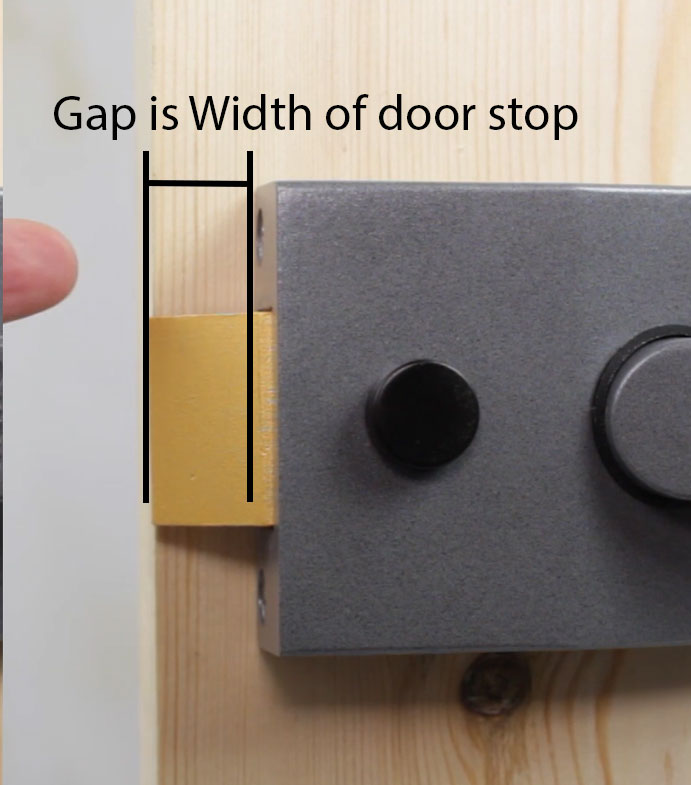
The reversed strike plate is installed on the door stop, allowing the latch to engage with the keep fitted to the door stop. This method offers a tidier installation, though it is recommended to use longer screws than those typically provided to ensure extra strength.